I was in three short workshops this past weekend at a big art ‘Palooza’ and trade show in Raleigh. The downtown Hilton had taped plastic over all their 1st floor meeting room carpets (!) and all the conference tables were covered with plastic, converting many spaces into studio workrooms. Some of these rooms had 30 or more learners staking out places at tables and unpacking their tools with anticipation.
You should have seen the crowd in this fine hotel: scraggly characters walking around in their paint spattered clothes.
The costs, especially for the supply store, were LOW compared to any discount house, so the gatherings were jammed. About 34 teaching artists, from all over the country, held court in each of these many rooms. Speed dating meets art class I suppose.
Each teacher had to discipline his presentation, highlight tools, gather the crowd for demos, and then let the students do practice sets. I learned some tricks. I bought a lot: new colors, supports to work on etc. But mostly I’m taking this home: practice what you already know and have. Dig in and keep at it. Keep your body moving toward what your heart is after. And don’t take partial as the finish.
What I mean is there were dabblers here at this conference, but also lots of examples from persevere-ers too. You can see the difference. The ones making progress are holding on alertly, curious, and active.
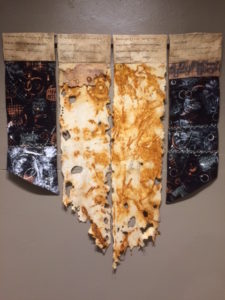
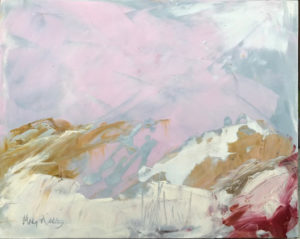 In one class there were so many folks that the teacher really couldn’t take much time beyond the basics, so I stayed in the back, one ear listening while I just worked and worked, turning out 5 pieces in 3 hours. The results were good. Here is one of them. What was the difference then for me compared to staying home and working? I am still thinking about that.
But here’s maybe an illustration that cuts to the chase. Eugene Peterson tells the story: the theologian Karl Barth was on a bus in his Swiss town, when a tourist came and sat next to him. Barth struck up a conversation. “You are a visitor, yes? And what do you want to see in our city?” The man said, “I would like to see the great theologian Karl Barth. Do you know him?” “Oh yes, I shave him every morning.” The man went away satisfied, telling his friends that he had met Barth’s barber.
There is joy here in this illustration for me, for I have sitting next to me, whether here or on the road, the One I really want to see and learn from. I just have to keep asking as I work.
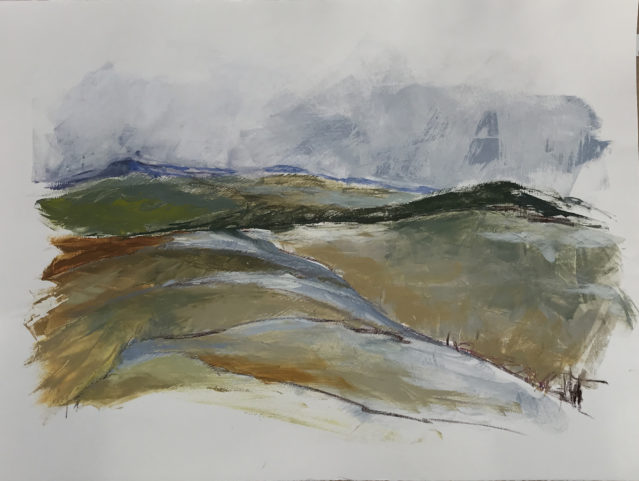
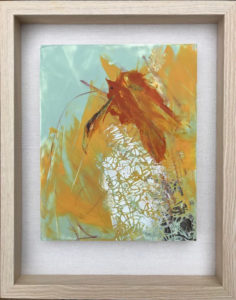 “Hope is the thing with feathers — that perches in the soul” Emily Dickinson, who penned this sweet line, knew a thing or three about meaningful hope. Hers was a buoyant expression, all the more poignant because she was equally aware of the hardness of her time/place and of her own internal struggle. Her poetry is rich for this reason: real, but outward even as she felt the confines of her tiny upper room.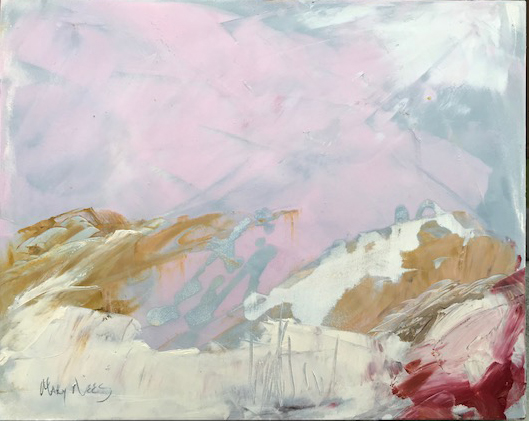
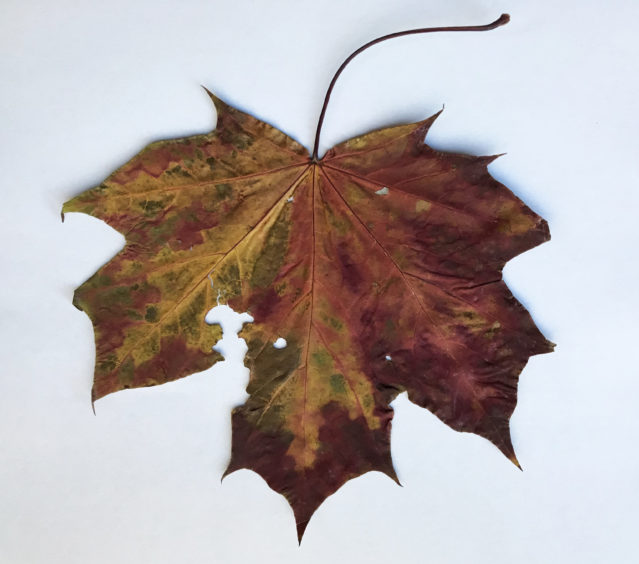
 Last night, near the point of retiring for the day, I opened a small poetry book, a gift given to me in Canada. Therein I found an added bit of beauty between the leaves. Pressed in the pages of this lovely booklet was a singular remnant from a maple. I had almost squished this leaf with my shoe on a walk in Vancouver. My eyes must have stopped me then, but I forgot that I had this incredible thing. The re-discovery near a month later was more delight than I even remembered in the initial find.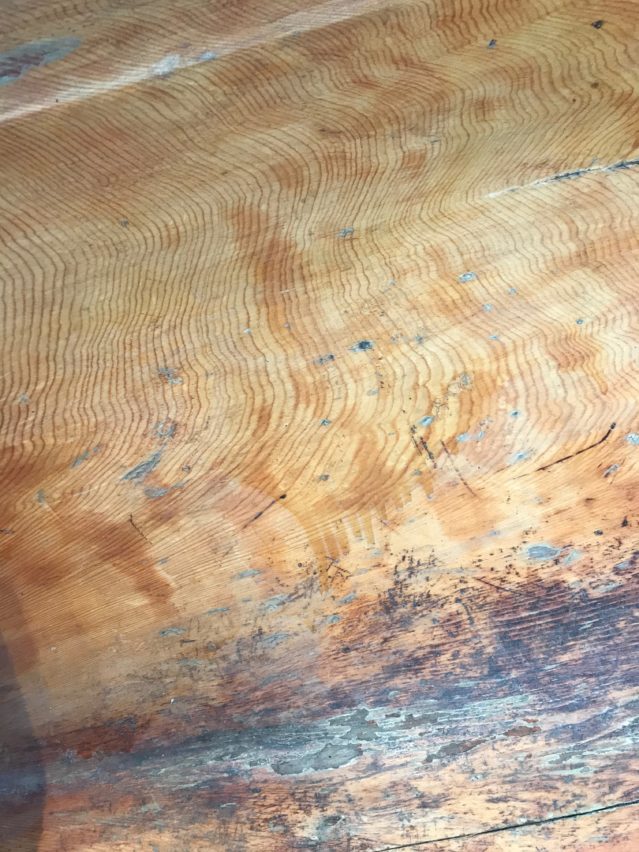
 The floor of a red cedar canoe, in the Museum of Anthropology at the University of British Columbia quietly testifies to its own story. Once standing tall and alone in a rain forested wood fringing the Pacific, it was scope-ed out then heavily laid down. Done. Cut off from its nourishment; it was then gouged, steamed and stretched by the hands of others. Soon it was deemed seaworthy, buoyant and bearing. It was now a thing, not a living thing. This lovely tree was un-noticed until it was found useful for the ends of others. It is said that the first nation Indians were careful with trees, making only single slits in bark to preserve a tree’s life.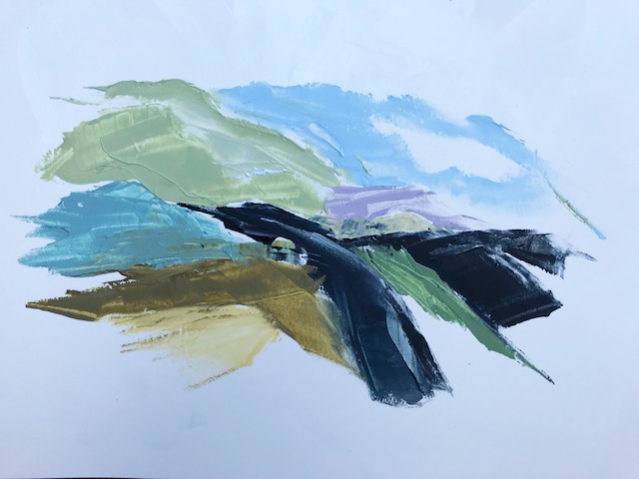
 Lord, You have been our dwelling place in all generations.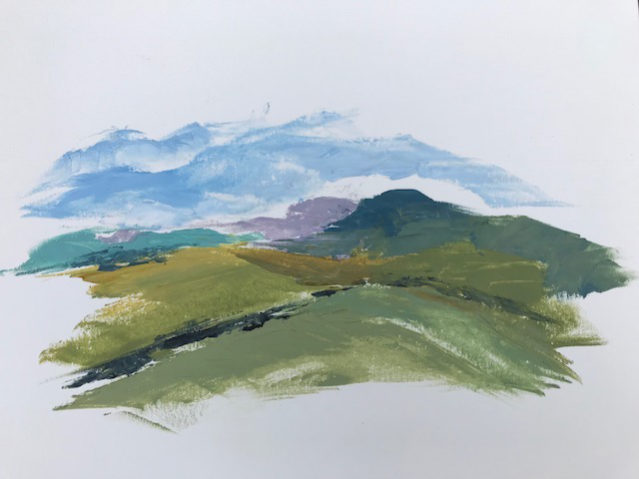
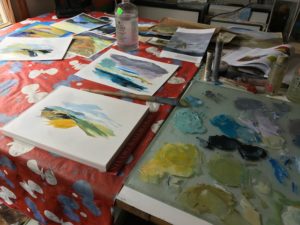 Yesterday in studio I worked up a palette of hues in oil, building from a photo I’d saved of an arctic scene in National Geo. You can see that here if you look closely at my messy table. I mixed up a set of replicated hues, pleasing together, and then added notes of my own with them, before I had any idea what I would do myself with this color grouping.
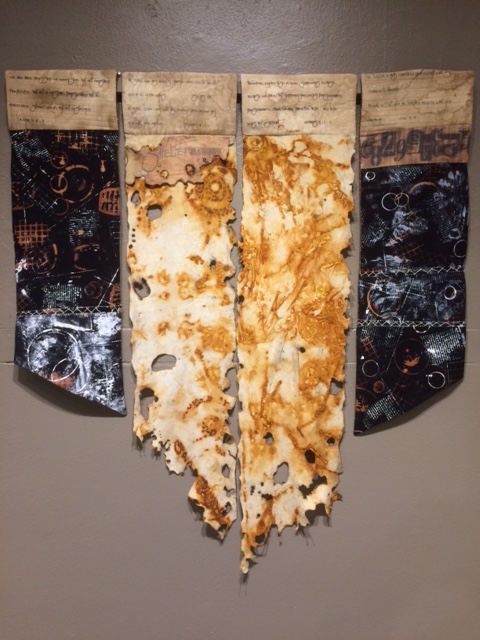
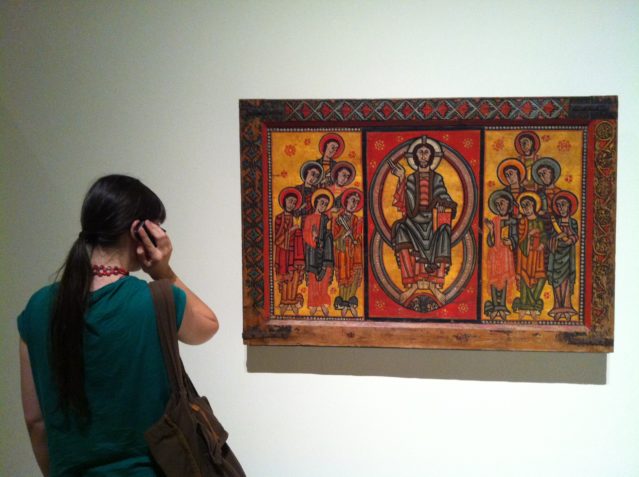
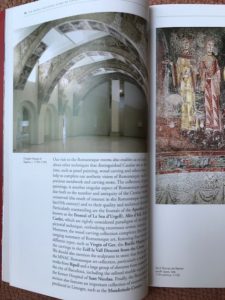 Barcelona’s National Museum of Catalonia has a collection of Romanesque murals that is unmatched by any museum in the world! Room after room gives one almost a time-machine opportunity to enter spaces that were situated in humble towns in the Pyrenees Mountains of Eastern Spain. These murals and sculptural pieces were then carefully removed to be preserved in the museum (imagine the public and private involvement to carry that feat out). Arranged in chronological (therefore stylistic) order, the spaces reveal the emerging imagery from small churches of the medieval period (11th-13thcenturies). What’s available then is a visualization of homegrown private conviction which was developed then displayed for public engagement. What was once internal became publically shared and what was then public becomes privately better understood. And this then down thru centuries for others to consider. Past into present. Imagine that ripple effect.
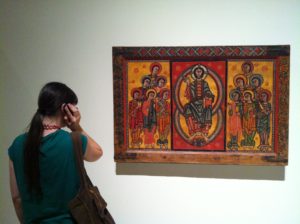 Here is a wooden altar panel I especially loved for its graphic punch, simplicity, and pattern. It’s a typical example of Byzantine flatness. Yet the abstraction of forms were rendered with human differentiation and quirkiness. The viewer of the time would have been able to relate. And the viewer now is carried into another world’s way of seeing, even if just catching a glimpse. What was private conviction of the artist became embedded in his public context, what simmered inwardly became visible for others to be able to look and see.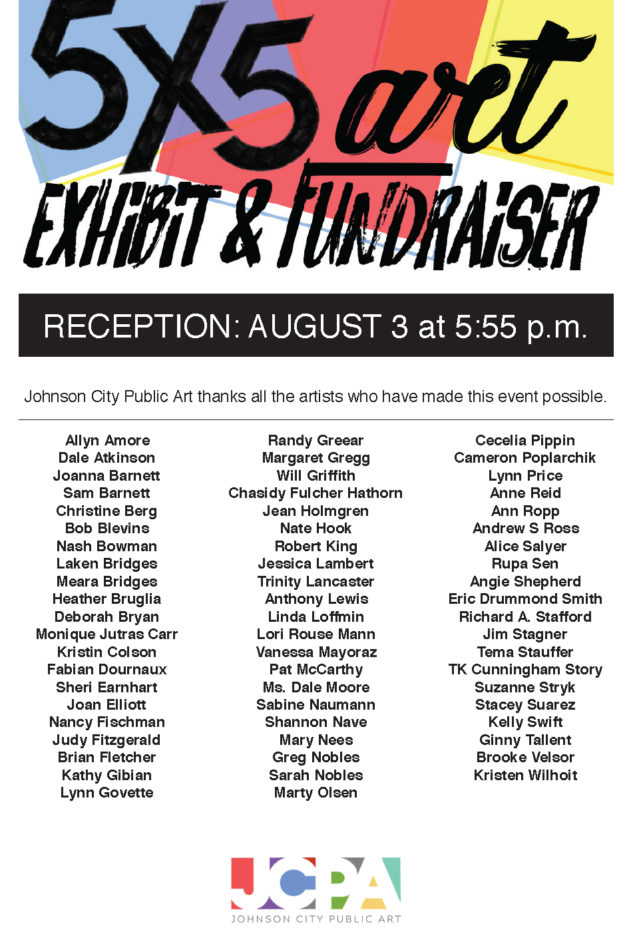
 If you are local, this Friday night the Johnson City Public Art committee (JCPA) is holding a “pop up gallery” at ETSU’s Tipton Gallery space downtown on Spring Street.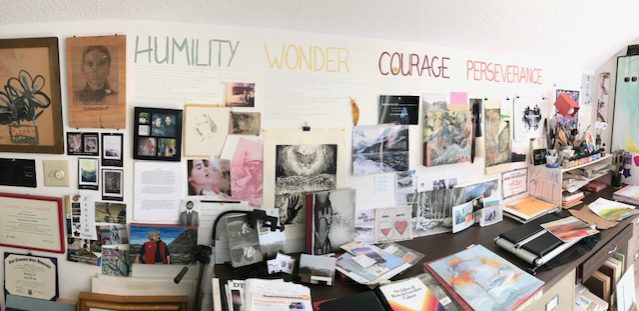
 Today is the 1st year anniversary of my
  It is an earnest and deep-seated Wonder before the biggest matters that keeps me working. It is needed Humility that keeps me fit. And beyond my own natural chutzpa there is a Courage I count on and ask for from the Spirit who made the world, who made me. Perseverance is the last bit I have to own, and own again. (These 4 aspects–I gleaned out of the Creation account in Genesis–are a sort of working prescription; that’s why they are written big, with growing notes on my studio wall).