Author Archives: marynees

drawing to discover

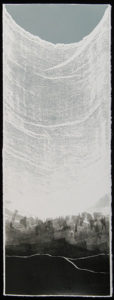
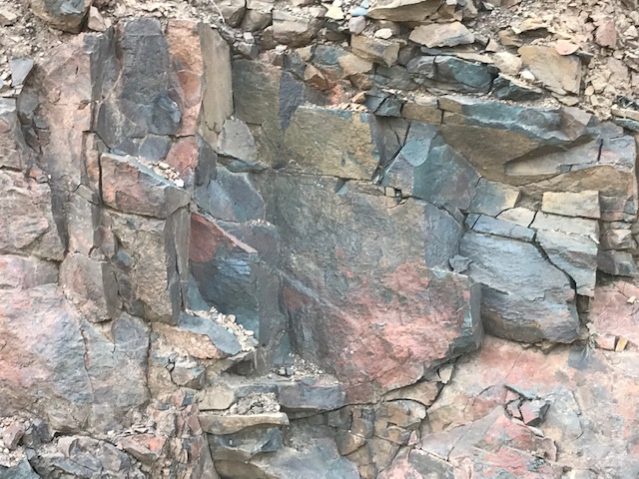
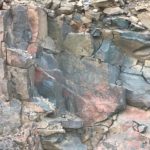
Blasted rock face breaks off according to the composition of the material being forcibly disrupted. Some rock just crumbles at impact, like so much hardened sand. Other rock, having been deposited by volcanic flow or metamorphic heat reveals these jagged architectural planes and lines when blasted. The visible cuts un-bury the evidence of long-term history in the making of the substrate.

I have a good number of wonderful (to me) photos of cut-faces as we recently drove around Lake Superior. Since a little kid, these broken faces have always drawn my eye. All I could say was “these are beautiful!” to the casual glances of others. Now I am trying to understand why these have so magnetized my attention.

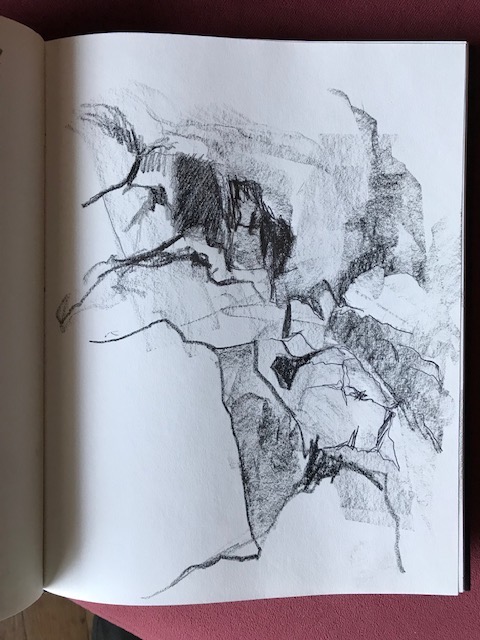
From burst photos taken in the car, then on site: en plein air, I have been drawing and begun painting — not to replicate, but to discover. This posture takes the pressure off, and opens doors for freed up investigation. For it’s not about the rock/lines/planes/color though that has captivated first. I use those as jumping off points. It’s more about the nakedness of the cuts and the beauty therein exposed. Oh to be able articulate that! It’s like this solid rock thing with its cut contrasts is a signifier of something else being expressed to me.

In his dreamy, harsh, philosophical novel “The Island of the World”, Michael O’Brien says early on that “people always seem to fall in love with the image first, never the substance…”. It’s pictures that draw us originally, but if we get hooked and we want to know, organic things can lead us so much further.

A good number of artists spend time endeavoring to go deeper, like cave artists. And ‘going in’, underneath, behind the surface of things is where so many spend dogged time. For example, the subject of “beauty” has long been recognized by artist/thinkers as having a component of fear attached to it. It’s strange but sure. It’s something really important to discover.
“Poets are dreamers, Josip. They scribble their subconscious onto paper in order to connect with food sources.” O’Brien brings in characters to help his protagonist Josip along in this search. And that’s exactly what I am doing here: connecting to some food sources of a deeper hunger.
learning from some elders

I recently finished an autobiography of a little known Canadian artist: Emily Carr, entitled: Growing Pains. Emily was Canada’s equivalent of Mary Cassatt, at least in terms of era, European training and singular focus. But Cassatt never left us with such an articulate journaling of her struggle. I learned of Carr when in the Northwest of Canada last year. I’d already loved the amazing modernist landscapers of the Northern wilds called the Canadian Seven; but Carr’s name, or her work, is not usually included in general groupings amongst them.

To have come from the provincial west of Canada, not far removed from pioneering times — to endure the scoffing of family and the pursuit of suitors for her singular desire to study — then to travel to San Francisco, London and Paris so that she could get art training — and to live through Victorian attitudes, poor housing and bad health while working hard is Emily’s life. She was spirited, rebellious, sensitive and diligent and for a good portion of her mid-life she fell back in discouragement, running a boarding house back in British Columbia. It was later in life when she was recognized and included by Lawren Harris. He was one of the Seven, and insisted on including her in some exhibits back in eastern Canada. More important is the record of his thoughtful mentoring of her progress by mail. Her own articulate words tell this tale.

She says early on, having discovered her love of the woods as important to her voice: “sketching outdoors was a fluid process, half looking, half dreaming…as much longing as labour…these space things asked to be felt not with fingertips but with one’s whole self”. Then later after Harris’ encouragement: “…help was a little notebook I carried in my sketch sack and wrote in while intent on my subject. I tried to word in the little book what I wanted to say…I stopped grieving.” Lawren responded: these “represent vital intentions…unusually individual and (are) soaked with what you are after more than you realize…then we approach the precincts of Great Art—timeless—the Soul throughout eternity in essence.”

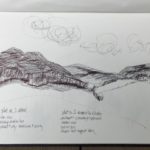
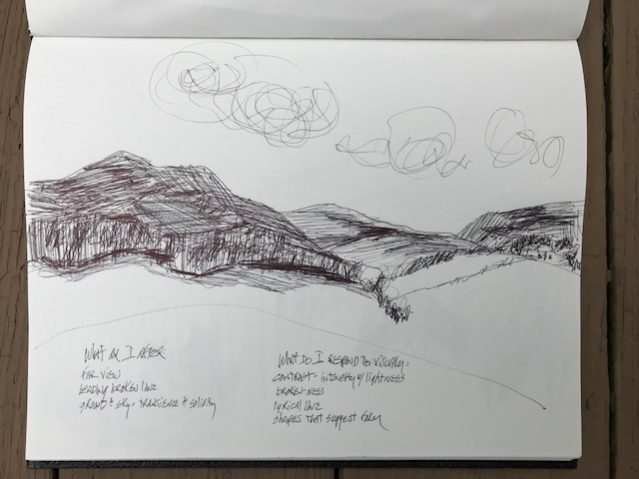
So, mentored myself by her words and his, I have started easing back into what I’m after in my own onging sketchbook. Here’s one recent entry.

for thought

It comes down on Monday, but if you are near Kingsport TN this weekend, there is still time to see a very good show at the Renaissance Center. The Appalachian Art Show for 2019 was juried by the Art Department curator at ETSU. She likes my work so I kind of expected to get in. But only one of my entries made it. The show this year is strong with a number of examples of really fine regional work. I was heartened that I got even one piece in once I took in all that did get selected.

What is striking in this year’s collection is the number of pieces that are ponderous and dark, with titles like “Premonition Destruction”, “A Blood Black Nothingness” and “Beauty Sleeps”. One landscape was a deep roiling sea with a lone raven searching for land. The best in show winner is Michelle O’Patrick-Ollis’ “Stage 4-Ressurecting Mama”. Her mother’s face is heavy with wistful thought, almost pressed right at yours on the picture plane. This is both honest and true, expressed with fugitive materials (coffee, conte and pastel) while recording the depth of hope that lives beyond this vanishing threshold.

Not all the work spoke so confidently. In fact, there is despair in the room. I feel it also out on the airwaves, and in hearts that I pray for. No wonder the artists are showing us this. Our days are hard and there is a foreboding sense, like a gray fog, which is moving in. Only the brave speak of it. Artists are brave ones. And sometimes they are like weather vanes, sensing the change happening before others can articulate it. Many artists seem to know “that the world is an uninhabitable place, temporary at best, the delicate balance between eternities…” as poet laureate Dana Gioia writes in The End.

Search his work and others who are not afraid to speak what they are pondering carefully while still offering the viewer some thoughtful hope, showing “what still matters”.

a live one

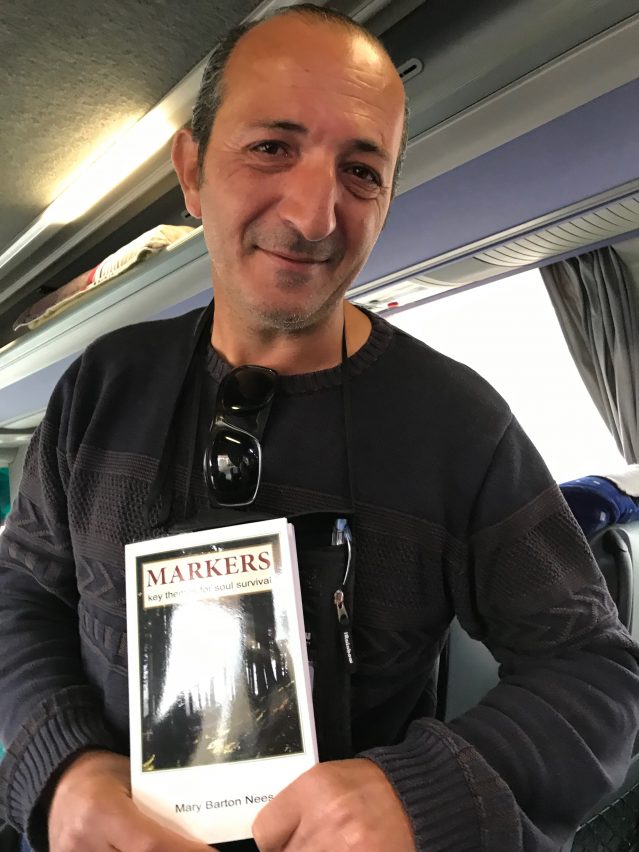
This man is Syrian. I met him last month in the sheltering nation of Jordan where he now is raising his family. Jabal* is a brother I didn’t know. I gave him my book as an encouragement for pressing on. But he encouraged me far more with his boldness, his integrity, and his active faith. We were on an adventure together and then the bus our small group was riding in almost smashed into a truck making a u-turn right in front of us, in the dark. I jolted up as we skidded and came to a sudden stop just inches from collision on the desert highway! Our shaken bus driver got lots of well-deserved applause. But Jabal went out and checked on the truck driver to try to determine ‘what in the world…!’

That driver was African, confused and now fearful that Jordanian authorities would be called. Being put in custody with no real way to engage consulate help would have been a hard sentence for that man, and Jabal knew it. We had a policeman with us already on the bus so next steps would have been immediate. But Jabal intervened; spoke to the African about Jesus and the sound/serious reason for being able to offer release. Then Jabal authorized dropping any charge. This was surprising to the policeman. This was rescuing for the African. This was ‘a day in the life’ for Jabal. This was one memory etched in my spirit.

It’s not easy a find a fellowship of earnest believers where Jabal lives, and he spoke of this. That’s another reason why I gave him the last book I brought along in my suitcase. And that’s why I still pray for him. There are active soldiers out there, and this gentle man is a real live one.

I haven’t been painting this month, my watercolor brushes stayed wrapped up in my suitcase. These words are just a sketch.

*his name is a pseudonym as there are enough non-gentlemen

synergy

There is so very often in my own practice what feels like a long incubation period before the bursting out into the open. It always takes longer than I expected to see the fruition. And then I hear this in my head “anything worth doing needs time and thought, planning and prep.” We all kind of get that. But here’s my problem: I’m impatient. I have ‘visions of sugar-plums’ or dreams of resolutions planted deeply. I don’t even know how they got there, but they’re there. Actually, I do know how they got there: lots of Bible reading and then lots of active prayer based on the clear promises I see. I get excited when I sense the glimpses. But then comes another corner to go around, another hindrance, and another disappointment. And these are incubators which take time and thought…I think maybe I just summarized my own internal life. You might see this in my work: for both the good and the bad of it all.

I bring this up for two reasons. The painting here happened quickly last month. It was kind of a surprise as I was working up several panels one day. I stood back and thought “hmmm, I may have just seen this pop to a finish. How did that happen?” The long incubators probably had something to do with it.

I was in Israel this month: a surprise trip, which also happened quickly. It was amazing in so many ways: friendships, learning, sensing the blooming going on there, some puzzles I’ve had suddenly clicking together… it was synergistic. I brought my watercolors, paper pads and brushes. They just took up space in my bag as I had not one minute to sit and use them. But oh my cameras were busy. I caught door frames and the wares of spice sellers. I caught the patterns on ancient marbles, and the blooms on a fig tree. My eyes reveled at the mustard yellows on the close hills and the sweet purply dimness on the far mountains –the planted rows of almond trees and date palms, and then had lunch overlooking the very hills where Abraham grazed his flocks. These things are all incubators. The fruition follows.

one sign of coming things

It’s not just the hints in the air, it’s much much grander and it’s in my spirit! “The times they are a changin” Who can plan or engineer these things? Certainly not me! I’ve spent many a frustrated season trying to pull things out of a hat, trying to make things happen, confident in my own chutzpa, only to find the results pretty paltry. 

So, I can’t tell anyone what makes magic. Except for this: what the angel illustrated for the prophet Zechariah (who didn’t get the imagery and needed more words:) “not by might, nor by power, but by My Spirit says the Lord of Hosts.” Can He get an amen?

This piece has been sitting half finished in my studio for about 10 years? Maybe longer. I keep juggling things around to make room and pieces show up and make me discouraged (“how come I never finished that!” or “what a piece of junk, but the board is good, I’ll just paint over it…”). 

I can tell my practice is improving because I am getting bolder and finding better results. There’s no magic in that except perseverance. My visible gray head is testimony of that!

But I am studying Revelation, that most ominous of books, and incredibly finding great hope in it. I know how the story ends and I can see how it is all being choreographed with meticulous thoroughness. Someday I’ll make a study plan of it for others. That is if I live that long. That will be with words on paper, but first come the images. The book of Revelation is chock full of imagery!

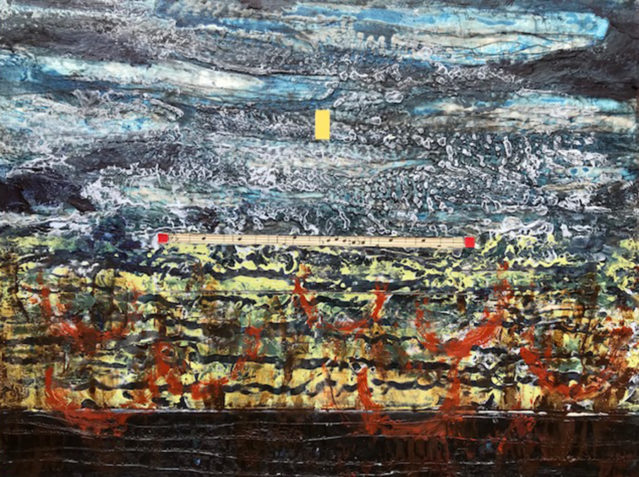
The energy and the urgency in the words is what is moving me forward. This is chapter 15, “Moses’ Song and the 7 Bowls” Finished February 26th, 2019. It is 12 x 15″, encaustic wax on cradled panel, with embedded collage, then cold wax mixed with oil color.

sign of the Fig Tree

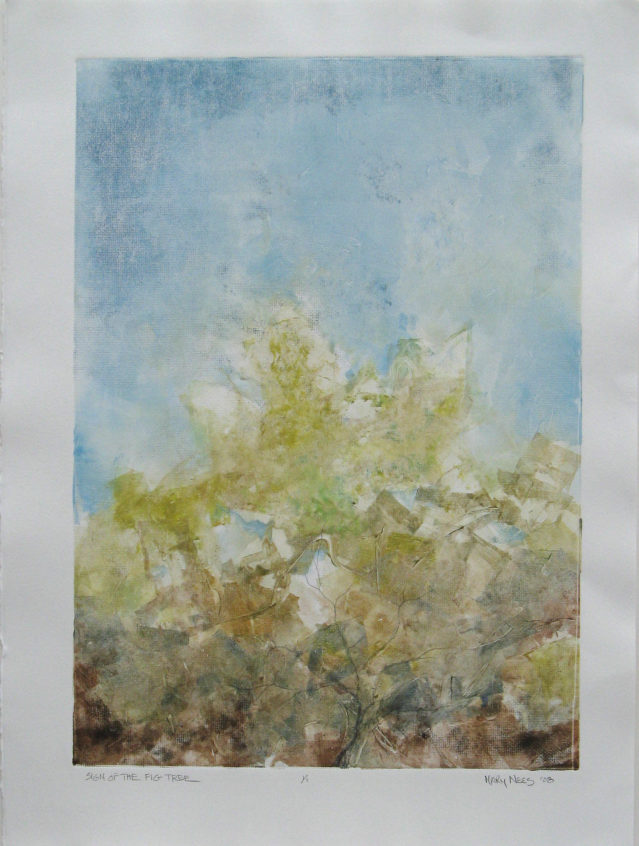
It’s the time of year when buds are emerging. It’s also the time of centuries, long awaited, of Israel’s coming to fruition. The re-born nation is celebrating 70 years back in her land. “Can a nation be built in a day?” exclaimed the royal prophet Isaiah at the very end of his grand vision. I am convinced we are living in the time of Israel’s glorious denouement. The evidence is obviously visible: the land is blooming. Many trees, besides the broad-leafed fig, show the fruit of Israel’s 70 year cultivation of the land on the eastern edge of the Mediterranean. They are back where they started. This monotype is a reflection of that further becoming.

Like mirrors which echo imagery down a long corridor, has the fig tree been a watchword in every age for those who have read the Jewish prophet Jesus. Many have longed to see what we are seeing now with our own eyes. Many prophets promised it, and many more eager for the fruit yet to appear.

Before the Roman devastation of the 2ndtemple in Jerusalem, Jesus, from the tribe of Judah, used a fig tree as a metaphor for his nation. It was not the time for harvest. And so the “sign of the fig tree” became a sad precursor to the Roman ruin of the Jewish homeland just decades after Jesus. The tree’s unfruitfulness at that time was a prophetic illustration of what was about to come down. 

Now that nation is reborn, and fig trees are blooming again. There is reason for anticipation.

The fig is the third tree mentioned in Genesis, after the tree of life, then the forbidden tree (knowledge of good and evil) that was nonetheless sampled by Eve then Adam. The Fig was the fall-back, not for eating at that point, but for the more desperate need for cover-up. Its broad leaves were grasped and stitched together for now there was an instinctive knowing of inadequacy, a need for costume-ing. It was the first masquerade. 

But for the gracious kindness of a seeking God, that is not where the whole story ended, though it could have. And that is precisely why this sign interests me. It wasn’t the poor tree’s fault to be a sign of leafy futility. The fig tree that Jesus spoke of remains a metaphor of what was and what is yet coming: Isael’s long term future toward fruitfulness. He finishes everything He began.

Fig trees are blooming again in the land. And the God of Abraham is still walking around. He’s still asking any who want to care the very first question he posed to mankind in another garden: “where are you?”


in the arena of intention vs. freedom

Recently this piece was purchased, and it now adorns a dining room where a fine young family gathers. Their selection was carefully deliberative between this and other imagery. I was not asked about this piece’s conceptual intention. I was content to stay mum about particulars, while appreciating that somehow this visual spoke without words. They are pleased and so am I.

And so I use this also as a prompt for some further thinking about an artist’s intended impulse and how it might dovetail (or not) with the freedom of the receiver to respond. Partly this is curious to me because friends came to see my work in an exhibition recently and were so more able to appreciate the imagery once they heard my extended words about it. I guess the visual work itself only speaks dimly? Does it need more words? Then too, my husband has been researching Robert Frost’s poem about two roads diverging. That poem and some other ideas were the impetus behind my monotype here displayed. What he discovered, surprising to both of us, is that the typical understanding of that poem is very different from Frost’s intended meaning. Is that a failure on the part of the poet? Maybe not. But is the world’s love of a different idea than what the artist intended a different kind of fail? Or is it just silently informative. I’m throwing these questions out there because I‘m wondering.

To put it more simply: Is it the artist’s obligation to be explicit or rather to invite? What holds more value: directing to any certain idea, or allowing the viewer the freedom to reflect? And if a viewer’s conclusion is incorrect from the intention of the maker, is that conclusion valid? Is it just as valid?

I make work to communicate. But at the same time, I really dislike “being told” much about anything until I want/need to hear it. Are you the same way? Maybe that’s why my imagery is semi-abstract. Like poetry, it’s a tease; it’s an invitation into the arena of consideration. And the risk is always there that the world will type my visuals as different ideas altogether. This is why I put words down on this blog. Words explain more about intention, and may be informative to those who are interested. But your freedom to read — whether words or imagery — is even more valuable. This is where I end and you get to begin.

hidden and plain view

Like me, you’re probably metering out what you’ll make visible, and what you happily keep to yourself. Social media has us all learning and adjusting in this balancing act of exposure vs. privacy. And visible international reach offers so much more exposure too, for good and for ill. I can see the stats on who views this page and it is worldwide. So, here I’ll just say “hello!” to those of you who read this out there in the great beyond.

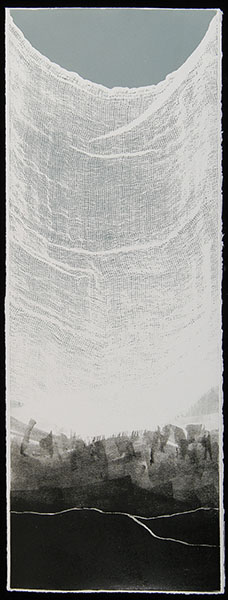
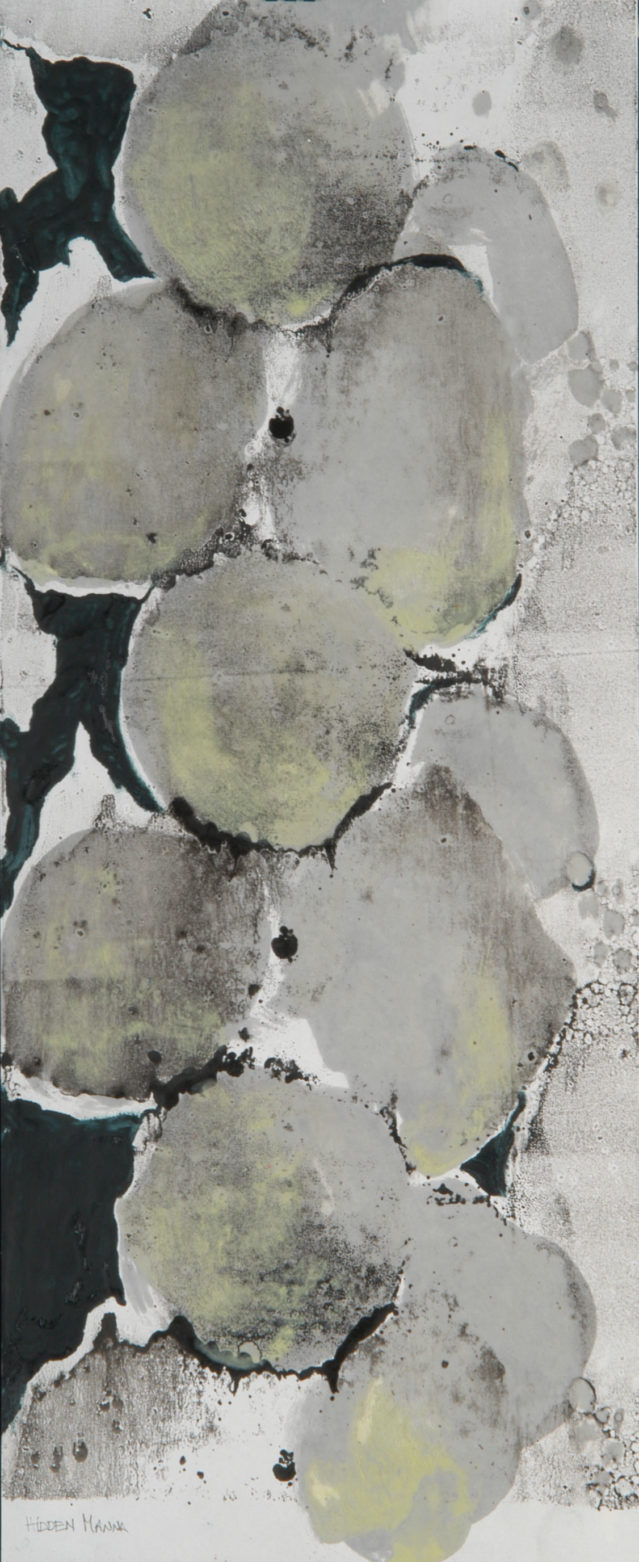
I highlight today a piece I made several years ago. It’s sister is in a big current show in our University museum. But this is the quieter of that duo and I want her to get some time in the electronic sun as well. For you see, this piece is visualizing something hidden yet promised.

I am digging through the book of Revelation, that last book of the Bible where the recorder is told to write down “the things you’ve seen, the things which are and the things which shall take place”. This book has me and I’m paying particular attention of late to Jesus’ words to the historical church. He has warnings, direct rebuke in specific cases, and words of penetrating comfort in others. Jesus knows the score. He is the coach. And He is about to end the game in time, “I am coming quickly.”

After the rebuke words, there is instruction and promise given to the “overcomers” who hold fast in their particular struggles. Jesus, with eyes of flame, promises in one case to give certain overcomers “some of the hidden manna”. What in the world is manna? Exactly. Manna literally means in its original Hebrew “what is it!?” Manna was a historical miracle of provision for the tribes of Jacob in the wilderness of Exodus. The stuff came down from heaven, landed like dew, and fed them continuously for 40 years. Now, in that case it was a public feeding, everyone went out and gathered it.

In Revelation the manna being promised is hidden, and it is given individually. For Jesus addresses a singular “He who has ears to hear…to him who overcomes, I will give some of the hidden manna”.

This much is clear from both instances of manna’s provision: The stuff is mysterious and it is given to sustain. It comes from God to us. In this later case of Revelation it is a private provision and very precious. The receiver would likely keep it that way.

But I am making this known, by displaying this beckoning visual. Did you know there is such a thing as manna available from God? Here’s the upshot about it from the text in Revelation: such a thing as manna is promised to certain ones. Jesus is the one who promises it. Such a thing is real and on the table; it will be fulfilled by Jesus. And whoever is fed by this will be sustained in the times to come. This is a picture of private assurance.

Reece Gallery

tangibility

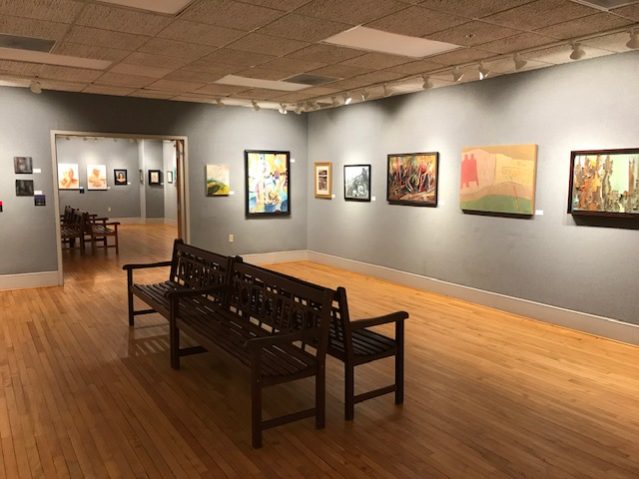
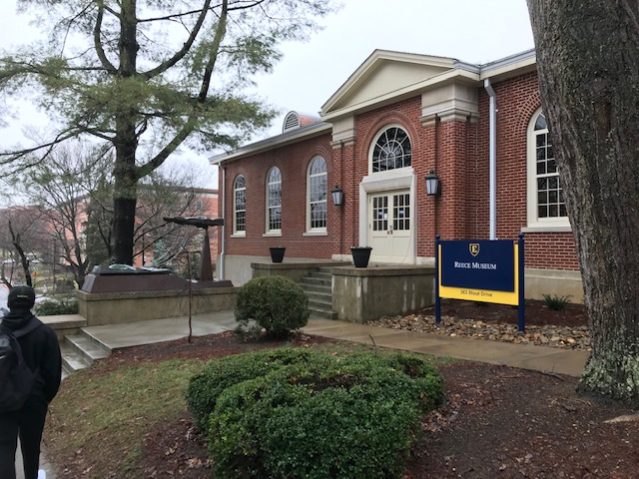
8 pieces from the image collection on this website were selected by some alert curators-in-training out of our University Art Department. The show they’ve put together is up and open at the Reece Museum on campus. You can read about it here.

My work is placed there within a stable of other regional artists working to make tangible/observable that which is of the spirit. This is ephemeral work, solitary. So, when it gets some further articulation, broader visibility, each one of us is gratified. The range is diverse.

There will be a panel discussion in one of the two openings for this extensive and thoughtful show on Jan.31st and another opening of more work at the Tipton Gallery downtown on Feb.1st. The essay composed from the thoughts of each artist will be as worth your time as viewing the work, for the images are rooted in thought and practice.

near and far

My interest in landscape, or more specifically “what is out there!” began very early. Before I had much language or even any life experience I was captivated and heartened by what I could glimpse out the window from my nursery. Doubt me if you choose, but I have a visceral memory of this. The years have only reinforced this sense of ‘the beautiful bigness beyond’. I recognize, now in hindsight, that this memory is early indication of some kind of spiritual quest.

My mature work is driven by an informed and sorely tested confidence in the promise laid out by the maker of the horizon, the maker of the warming sun, the maker hidden behind all these things. And these ‘made things’ speak forth deeply through their substance.

As the year turns (and 2018 has been such a big one for us) we don’t have much idea at all about what 2019 holds. We can see some near things, but not what follows.

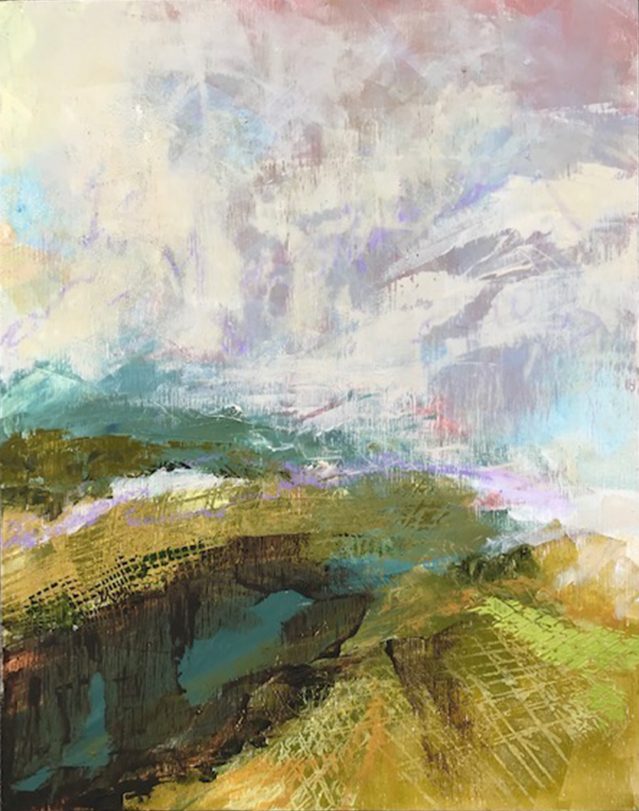
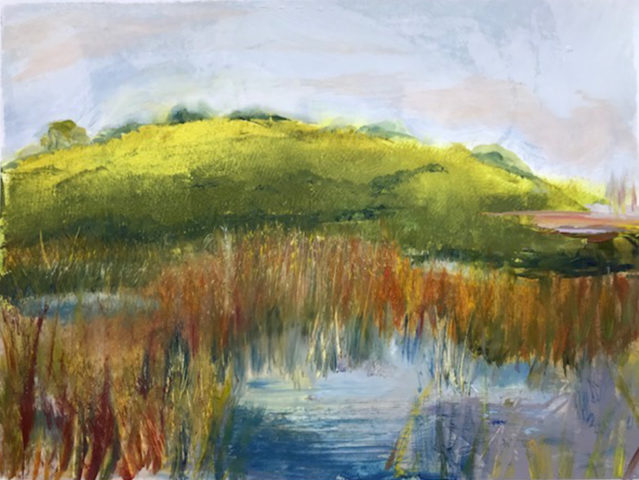
So today I’ll highlight here an oil sketch I did this past May. I love so the horizon in this piece: so dimly suggested but sure — though some distance beyond the entire articulated foreground. That’s why I will keep this one, for the contrast between the known and the yet unknown is a symbol to me. What is just over the next rise is what draws my attention. And because my heart has learned to rest in the capable hands of my maker, I am not afraid.