Author Archives: marynees

the sign and the Substance

In a New York magazine I recently read this statement: “We remain human beings… and we orient ourselves in time, looking forward to the future. When that future has been suspended, humans come undone.”

 And this report is even sadder.

 I will say here what the writer of the first article said, and what the Doctor in the 2nd article surely felt: “I began to loose it this week”. I echo his words; my heart grieves. The time is getting long and longer. You know it also; it weighs on all our hearts.

Several years ago, August 2011 to be exact, I was sitting in this very same house when a rolling quake went up the entire Appalachian chain. And, with incredibly no loss of life, it yet put a visible crack into the pinnacle of the Washington monument, 400 miles away. A few weeks later after that quake, in a remarkable set of unplanned circumstances, I was to stand in front of that monument, observing with my own two eyes the crack on its top. For me: the quake experience and that subsequent sight was a serious sign. When my house jolted, when my ceiling fan started to wildly wobble, these words of Jesus came fast into my head: “But all these things are merely the beginning of birth pangs”

Birth pangs. I remember when I was in my own first labor, when a nurse on the next shift came in and pronounced something about her expectation as to the length of my transition. My body hadn’t done this before; we did not know. But this nurse’s glib assumption, turned out to be incorrect. The signs were obvious, but the timing was not. And here’s the substance: the birth did happen; and in the end, that was what mattered. A couple years later, when labor commenced with our second child, the early signs were now familiar. Previous experience had prepared me, but it was no less ominous — for once that progression started, I knew I would not be able to stop it, no matter how long it took. That recognition was the worst part of the entire birthing — more than the physical pain, was that sense of control loss. The process was hard; the result was sure. We’re in a time like that now and I recognize it.

Labor is a sign, and signs are only that: they point to something else, which is much more substantive. Signs signify, but they are not the true event: only the preparation for it. A red hexagonal metal stand with the letters STOP is not the intersection but rather the warning before that place. Small earthquakes are not “the big one” but rather an indicator of others coming. Labor pains are not the birth, but the necessary movement toward that event. Are my eyes on the prize or on the pain toward getting there?

We’re all in a certain labor, and many feel it worse than I do. But I had a sense of the weight of it this week; it put me under for some hours. It reminded me of the glib words of the nurse who did not know my time and made a false prediction. When it comes to whatever is ahead, best be sure, and that’s why Jesus’ words catch my attention. I feel we’re on a moving train, like a progressing labor, and we simply can’t get off. Something is coming ahead, and being prepared is only wise.

JRR Tolkein said “It does not do to leave a live dragon out of your calculations, if you live near one.” But hold this in your heart: the dragon is not the Signifier. That Signifier we await has authority over the dragon, over any virus, over my sinking heart.

What is settling out as newly evident to you as you hold this tension, as lesser things hold less value? What is it you are trusting?
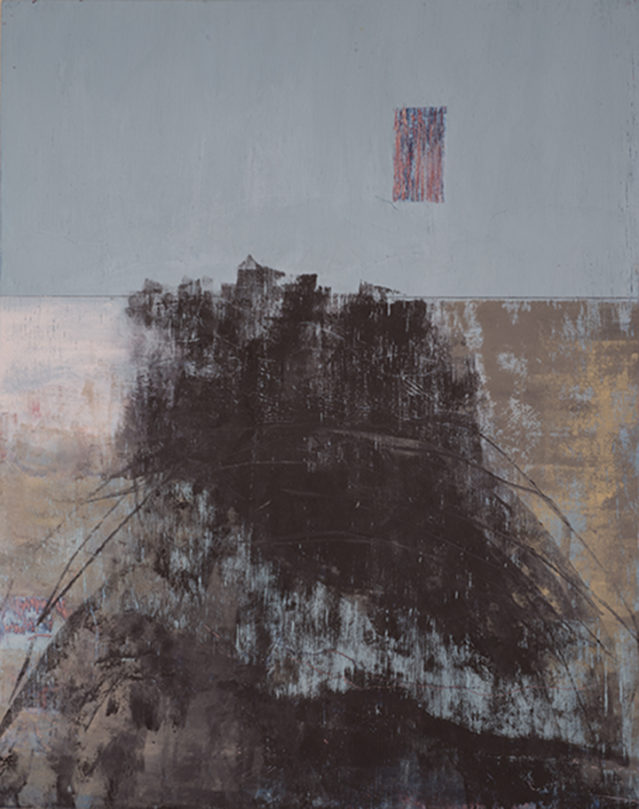
For me, it does not end here. My future may be somewhat certainly suspended, but temporal expectations are not my end; I am loathe to make something tangible here my end. I am going to hang on until the promised birth, if God gives me the grace to do so.

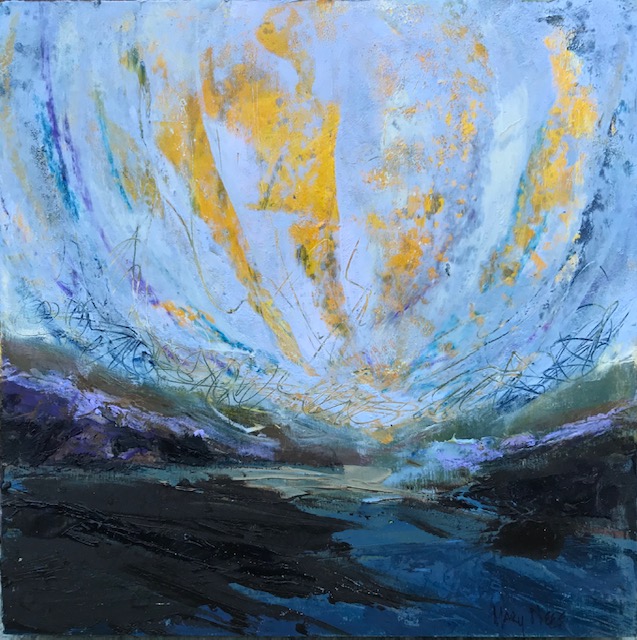
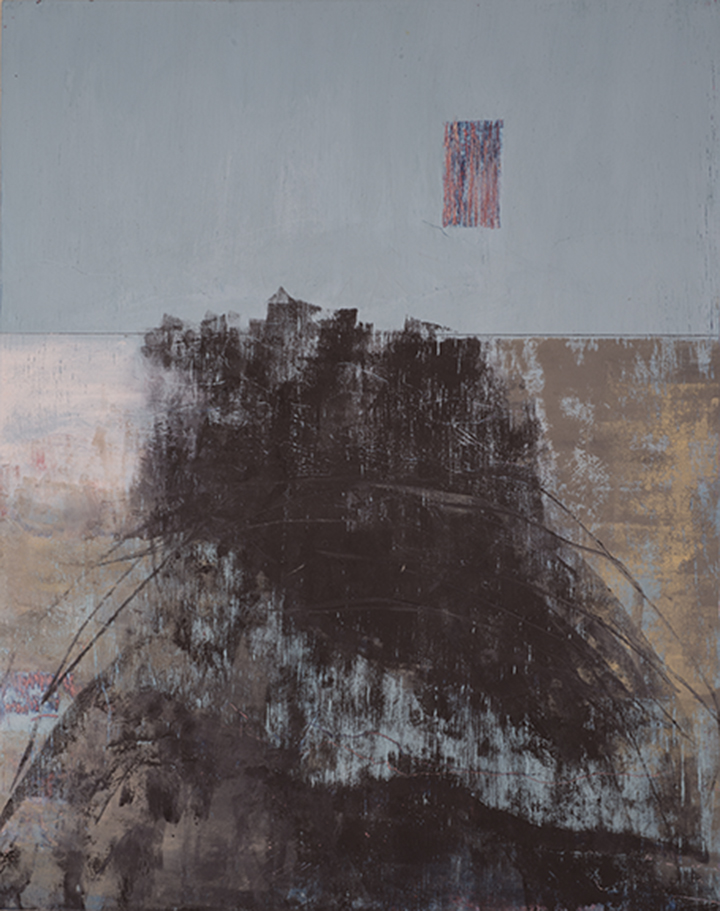
I image an older piece here entitled “The Valley of Achor” taken from Hosea’s words for holding on and for looking ahead. The prophets all spoke of the Signifier.
when your heart finally wakes

Most our lives we’ve moved right along to “the next thing”: school assignments, testing dates, graduations, interviews and invitations. Labor pains have led to births, births to nursing, to raising, to cheering and teaching, then finally to letting them go. Then doing that again alongside others. Both my husband and I are “to do list” people, and so this stay at home order has been good for getting simpler things done which have long missed our lists. We’ve taken walks on the empty campus near our home and marveled at the sprouting of spring. He has taught himself how to tie his own flys between zoom calls, and I have created an online story time with two of our grands as part of their homeschool. The attic has been cleaned out, and now my studio. Never in 70 years have we had to consider what to do with paused time. How has it been for you? We are mindfully grateful that we are not stuck in an apartment in some dense city, nor in the Congo where our friend tells us people are much more scared: where hunger at home is challenged by danger outside. Being older, we’ve been urged by our daughter who works in a hospital emergency department to “stay home!” But all of us, around the globe, no matter circumstance, have been given poignant pause to weigh “what do I do now?”

Pauses have a way of reaching us where the pace of normality never did, and never could.

I recently taught a Bible study on Revelation, and it is startlingly noteworthy that midst the horrors that sequence through that prophecy, there are valuable pauses. All heaven seems to wait while those on earth decide what it is they are going to do. In that I find a great sign of mercy. The time we have now is mercy. We’re all quite good at numbing ourselves through things just to get to “the next thing”; maybe that’s a mercy too, but easily we miss a lot that’s important when we do.

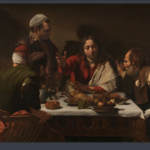
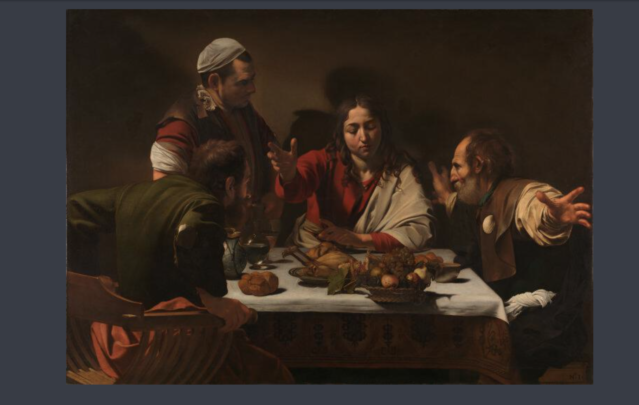
I highlight a famous Baroque painting by the Italian dramatist Caravaggio. We studied this up close at the National Gallery in London in 2012. I had always wanted to see it, for it portrays in theatrical fashion the moment when Jesus (yet unrecognized by his fellow travelers) breaks bread at the table. They’ve been clueless as to who it is they have been traveling with in their distracted sorrow. Try to get past the early 17th century garb and the insipid looking Jesus and place yourself at that table as Caravaggio intended. There is a place for you there. And it was only in that pause — in the tearing apart of what was common and basic, that the strangers finally understood who was sitting right there next to them. The real Jesus is still looking to join you where you sit too. Will you take the pause you have and allow Him?

the gathering above

“The black sky was underpinned with long silver streaks that looked like scaffolding; and depth on depth behind it were thousands of stars that all seemed to be moving very slowly, as if they were about some vast construction work that involved the whole order of the universe and would take all time to complete. No one was paying any attention to the sky.”

Quoted here is a section from Flannery O’Connor’s 1st novel “Wise Blood”, in which the writer uses her weird characters as darkish foils to prod the reader into considering timeless things. O’Connor was a brilliant and lonely critic of secularism’s vacuity; she considered modernism naïve. And like Jesus, her harshest stories called out religious emptiness. How would she be illustrating the bigger story for us now? O’Connor would be a good one to read if fiction is a way into your heart, for our world is changing and we need to get a grip on what it is that is truly mooring us.

You wont find what anchor’s your soul in the material world. How can I make such an assertion? I’ve lived enough life; I’ve read the best “good book”; and I know how it ends. If non-fiction is a better way in for you, this is time tested. Meanwhile the National Geographic arrived this week. It is expensively produced, in a ying/yang edition titled “How We Saved the World”, or from back to front “How We Lost the Planet”. Take your pick; they’re giving us only two options. One would think such an organization committed to the earth would offer a few words of acknowledgement to earth’s Maker. But no. And, they admit: they don’t know the future. Only the One who hears prayer does.

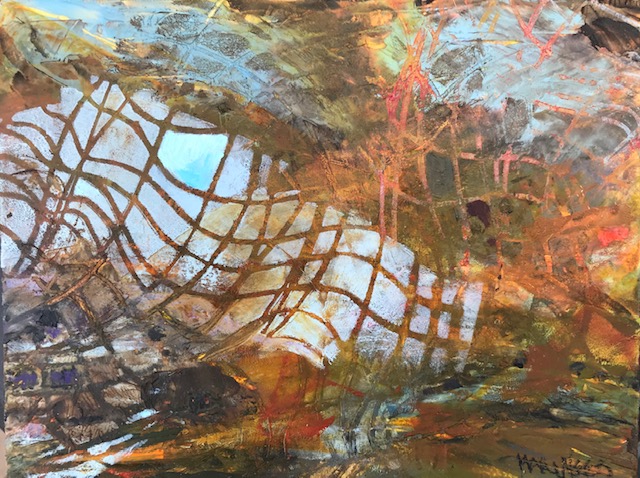
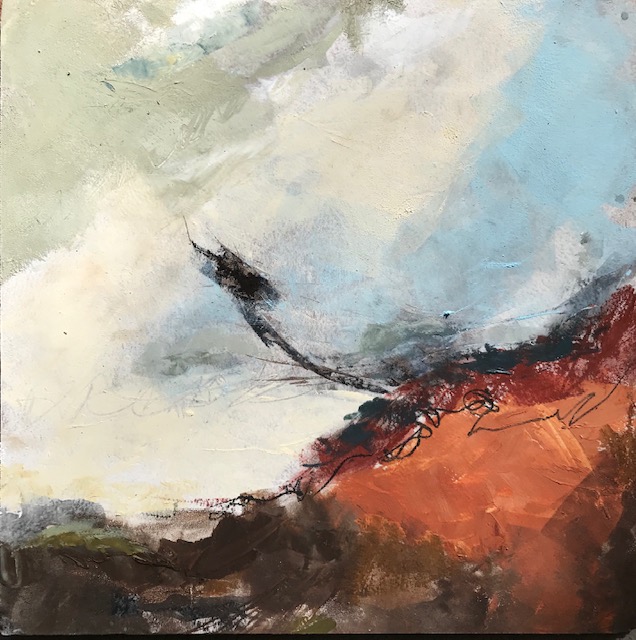
The image I post today fits right along with O’Connor’s description, as she teases the imagination higher. Here’s another look-up for you. I’ve had the texture and the hues on this oil panel for some months, but I could not resolve the whole satisfactorily. Then suddenly I realized I needed to give it a window beyond the morass of the now. Voila!

living through interesting times

“May you live in interesting times” Are we there yet? What is ironic is that the assumed source of this quoted adage is said to be an ancient Chinese casting, clothed in kindness, while actually a curse. But checking it out, there’s less evidence about the true origin of this statement than there is about the origin of the coronavirus. Nonetheless, I’ll use it as a prompt. In fact, I’m changing that curse from living in to living through.

To start with, there is a huge difference between interesting and frightening. We’re each living on the edge of that difference; and sorting it out in the disruptions. Much more, living through interesting times is one thing, understanding them another and lies abound all around the globe. Check out your sources. Be sure of what it is you are trusting. Just two days ago I shared something I thought reliable on facebook only to have it exposed as an internet meme. I left it up as an object lesson for myself and for friends. For a better historical example I think of the sons of Issachar, and the Persian King in the time of Esther. We have some wiser ones around us now. Pay attention to those who demonstrate trustworthiness; the evidence of their track record is entirely informative. In Moses’ Israel, anyone who claimed to be a “prophet” needed to prove 100% accuracy. That would rule out a huge percentage of our talking heads. Not one of them knows the future. Not one who is mortal.

People who know me say I have a calm spirit! That’s been said several times and it always surprises me, for I know all the rumblings going on inside. Gratified by their perceptions, I say I have an informed spirit, layered by years of looking into things that are surer than fear. Do I fear? As sure as I’m born, and still breathing here; I do. But, I don’t like stuck-ness. I don’t like being paralyzed and that’s all that unhealthy fear does. So, understand that fear is necessary, but it can quickly become a paralyzer. Fear is simply an internal reaction to fear-full type things. It’s natural, and it needs respect and investigation. We stop and consider when alerted by fear, which is a great protection. But when we stay in any position of fear-full retreat we become dumb like turtles. And the internal rumblings multiply exponentially inside us more than the number of virus cases outside.

We’re in a season now, a revealing one for those paying attention, where people who are trustworthy have something that others see they want. The cream rises to the top. If you’re alert, you’re already seeing it where you live. For people like me have found an inexhaustible resource in the One who gives many reasons why “fear not” is even a possibility. There is someone better to fear and to respect. I direct my thoughts to Him in true gratitude. Curious? Do a google search for every time those words “fear not” are said in the Bible and observe, like your life depended on it, for the reasons given why. Or just read this Psalm portion with mindfulness.

So, I am working. And what is coming off my hands is informed by what I’m focusing on. Bayles and Orland, in their helpful handbook Art and Fear say “Basically those who continue to make art are those who have learned how to continue—or more precisely, have learned not to quit.” I have some good reasons to keep on alertly. And, some increasingly good results. This is titled “Laodicea and the Dragnet”.

sevens

Here’s an interesting thing, I did not plan this. Two weeks ago in studio, I prepped some square panels I had stacked; and since I had some gesso left in the cup, the brush still wet, I grabbed a couple more panels and coated them also with this base coat. Did I have a plan? All I remember was that I was going to make some starter marks on a couple of the panels once the gesso dried.

I then set out a simple color palette, and started in, working intuitively. If I got one solid piece out of the workday, I would have been satisfied. Some days just getting in the studio and working is victory enough. I am deliberately taking the pressure off. The effort is all practice. And the freeing thing is, if the result is poor, it’s just some history I can work on top of next time. Is it true that “the mouth speaks out of that which fills the heart”? In my case, the arm was moving out of that which was in my mind and probably my heart, for I have been studying biblical prophecy.

Now, I was not planning on illustrating what I was learning, that usually does not work well for me (it gets wooden that way, or even didactic). And I did not purposely select seven panels, I was being solely utilitarian with the materials I had, and the space on my worktable. My aim was to just get the materials moving. I started working on several of these prepped pieces at once with darks on white value studies and then worked in hues. If it had occurred to me at any point that I was illustrating something specific, I would have tightened up. But surely the data in my head was being drawn upon as I just played. My expectations were free.

It was only after several hours of back and forth with the materials, rotations with the panels, that I realized I had near completed seven pieces. And then my head kind of exploded with the realization that these panels were a group of seven. I counted them: 1-2-3-4-5-6-7, yes it’s actually seven I’d been playing around with. Well, that was interesting, I thought to myself; I could reference the seven churches described in the beginning of Revelation with these, and maybe also incorporate the recently realized correspondence with the seven “mystery parables” that Jesus outlines in Matthew 13. The convergence between those two groups of seven is really fascinating. And here I had seven compositions of my own hand, which obliquely fit the main ideas in each of the two literary groupings. This, on panel, is my own surprising revelation. Showcased here is the 2nd of that series: “Smyrna and the Tares”. I haven’t yet titled the series.

“add oil!”

The cries are reverberating out the windows of tall apartment buildings in Wuhan. And video is filtering out worldwide. Their pleadings are meant to be encouragement to fellow Chinese in this quarantined city of 11 million people. “Add more oil!” is a figure of speech, immediately understood in a culture that excels in creative stir-fry. One always adds oil to enhance the dish and to keep the vegetables from burning. “Add oil” is similar to what we would mean when saying in English “hang tough”, or  “you can do it”. Can we? Can they? Is a shouted pep talk into the air enough?

What does one do when locked in at home, when supplies including oil and everything else are dwindling, when the hospitals are filled and dangerous? I am not frightened. I am rightly concerned. And I have been thinking for a while now about how to help newbies learn how to pray. For we need to know.

Here’s one true statement: Everyone prays. At least once in each life there is a desperate instinctual cry that goes up into thin air. Don’t tell me it’s not true. You already know it is. And if you don’t know this, you will.

Here’s another true statement: Not every prayer is effectively ‘talking to somebody’. Some cries are hopeless castings to the wind. Would you know the difference?

Still reading? If prayer is what we do, even if last resort, would it not be important to take time now to learn to do it effectively? Are random shouts out a window accomplishing much besides some attempt to hearten other citizens? Is there such a thing as really talking into God’s ear? And if there is, how does one do that even with just a whisper?

There is warning that Jesus told about this very thing. It has to do with adding oil.

After a concerned listing of signs, detailing what the end will be like before His return, Jesus eases the gravity of the situation by switching to a couple stories to emphasize their need to “be alert”. In one he paints with words a familiar Judean scene of maidens awaiting the bridegroom. The time gets long into the dark night of Jesus’ story, and when the groom finally arrives the maidens arise from sleep and trim their lamps. But the critical point of the story gets revealed at this point. Only some of the maidens were prepared with oil. In the immediacy of their need, certain ones cry out to others: “give us some of your oil!” But the prepared maidens give answer: they cannot share; they must not. Instead they instruct the unprepared maidens to go to the source for oil themselves.

In this is the first secret of prayer: Go to the Source for the oil, and start out now.

In both the Hebrew and the Greek Scriptures, oil is a reference for the protecting, softening and sustaining spirit of the living God. He is the oil. He is the source.

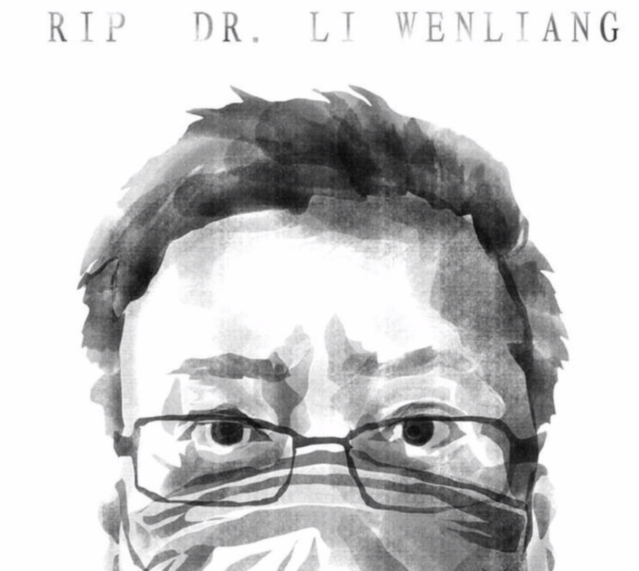
The image in my post is of the Ophthalmologist who first warned of the virus which now ravages his city. He has already succumbed, but according to his own testimony, he had oil for his own lamp.

looking up

It’s a surprising turn around, and something you can do. Given the news on the ground, we need to keep lifting our eyes. Here’s one way I was reminded:

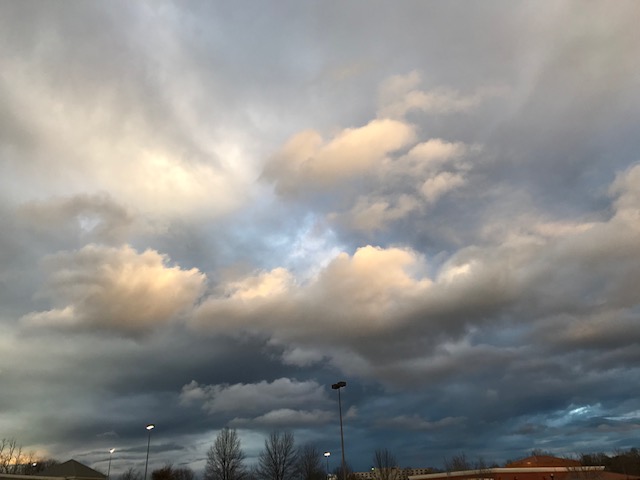
This past Friday, after an early morning meeting, I decided to hit the Kroger to get a jump-start on other things that needed doing. At 7am, the Kroger has decided to only rely on their self check-out kiosks, so I gamely ran my many items through the scanner, only to find it continually malfunctioning. Groan. The clerk who came to help was having trouble too, for the system kept shutting down. I hated it. (Note to self: don’t go to the Kroger again this early. Next note to self: don’t take your frustration out on this poor worker who didn’t cause this problem). 40 minutes later, groceries redeemed, I left the store with a frown.

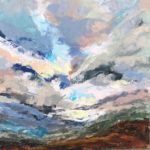
But then, in the morning light, I looked up and saw this most fabulous sky. It was getting ready to storm. I stood there transfixed and fumbled for my phone to snap some shots right in the middle of the parking lot.

Seeing this changed my frown, and my entire mood. It was like a mini redemption after the struggle to bag some stuff. In the background of our days, the frantic 24 hour news cycle keeps us all on edge anyway. I’m resorting to music more and more. And I think often now of Jesus’ words “But when these things begin to take place, straighten up and lift up your heads…

I have since last week made three small oils of that sky. Here is one of them. The imitation is only flattery. The pixels in my phone aren’t even adequate. You need to look up to find your own real thing.

face to Face

“We’re living thru a period in which we’re de-facing things…” said Oxford Philosopher Sir Roger Scruton, “we no longer see the light of the soul shining in things”. In many of his writings, Scruton argued that as cultural materialists, we’re no longer valuing ourselves (and therefore others) at the core because we don’t look face to face. “What core?” says the careless atheist. Scruton, recently deceased this month, would have countered that the immaterial part of each of us is the real lasting story. What is entirely unique in each face is a reflection of a deeper substance: the soul–which is self-conscious, multi faceted, freely distinct and making decisions even to the end of physical life. Scruton also posited that we never become real with ourselves, or known until we face another right in front of us. And further, he surmised that when one comes before the face of God, without a barrier between, that we become finally ‘in touch’ in the deepest of ways. The face is the front forward of the being, and to hide from another’s face is to devalue that one.

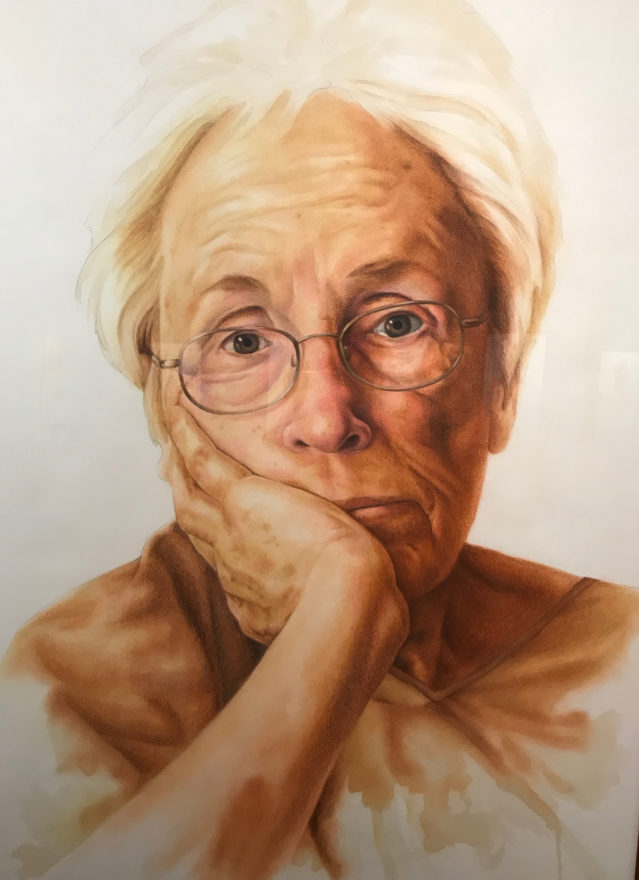
His words made me think of this painting. This was accomplished by an artist friend using various dilutions of coffee and crayon. The fugitive media she selected to describe her mother is itself a poignant counterpoint to the lasting depth she expresses! This was a real woman, caught in the heaviness of later life, before she passed away. Every line and wrinkle is only a marking of the deeper whole behind the skin. And because the artist faced her mom, honestly and directly, it is easy to imagine how she loved her.

This drawing may be one of the more beautiful things I have ever seen. The faces of my babies were certainly most beautiful in their purity, but this face shows the struggle of time. There is something accomplished here in the drawing that stops me. Scruton described it as: “The arrest of the self by the confrontation of beauty, the significance of tragedy…we’re taken up by it”  

My work, and my skill sets are entirely different than what this artist accomplished. But Scruton’s words challenge me about elucidating some way into beauty, combined with the truth of tragedy in a way that takes others up also. It’s a matter of facing the Face.

time: a slow mercy

This Fall I got to see Mercury transit across our sun. Through several chubby telescopes, positioned on tripods in a field on campus, a cluster of the curious took turns. The planet was like a speck of pepper on a large egg yoke. Various scopes were set to filter the sun’s light energy so that the color of the gasses around the spherical giant reflected to the eye a different view of it: orange, red, yellow. But the movement of the dark speck did not vary. It moved in one direction. This vacant planet has a set course, slow but sure, creeping silently across the brilliant light behind it.

Mercury is near impossible to see in our skies because of its size and orbit, so this was a rare opportunity, which a knowledgeable friend had alerted me to. And, it struck me as I tried to absorb the significance, that various orbs are moving above us all the time, we just go about our business on earth hardly aware. Like gears in a vast cosmos above us, there is predictable movement. It’s a picture of time. And once we’ve passed through, that time is past, not repeatable.

This comforts me strangely. For time is a slow move. Time is time. Think of that: time means I have time. Its sure ticking gives opportunity to reflect as I breathe here, to consider, as John says in the book of Revelation “the things which you have seen, and the things which are, and the things which shall take place.” We’re living in the already/not yet place of possibilities. But what is set is set. Can you hold that in?

I offer as illustration a small piece I did last year and gave as a Christmas gift. To me these big things are better caught than taught. I wish you relief from what is past and can now be put away. I wish you a growing confidence in what is set above you as we all move now into another decade of change. Happy New Year.

advent

Can you gather in the wonder–

Though all around distracted. Mad.

Could it be that God would enter

Undetected, gently clad?

Would any king in human ranking

Be so willing, so dismissed.

But come to conquer our heart-blindness

And through time to still persist?

So silently the rays of wonder

Seep beneath and all above.

Deception’s stronghold all asunder

When one admits the prince of love.

direction

I’m noticing the direction and the repeated rhythms in line work. Because, where my arm wants to go with marking tools reveals where my heart has been simmering. Years back, when studying instinctive 1st marks on a surface, I realized I was chopping with vertical slashes. I was angry then, and impatient. I’d had it with waiting. I was trying to bring the action down. (Woe to anyone who got in my way, aren’t you relieved I’m not God?). And interestingly, at the very same time I was finding how important, how necessary the horizontals were also: for rest, for balance, for compositional completion. You can see one example of a horizontal which remains in the background of my entire website.

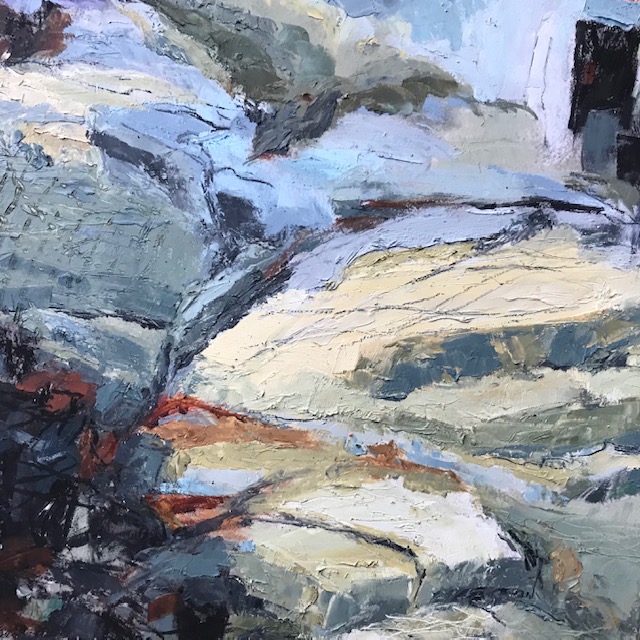
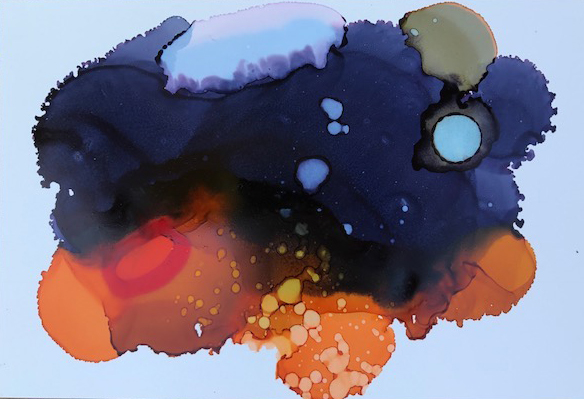
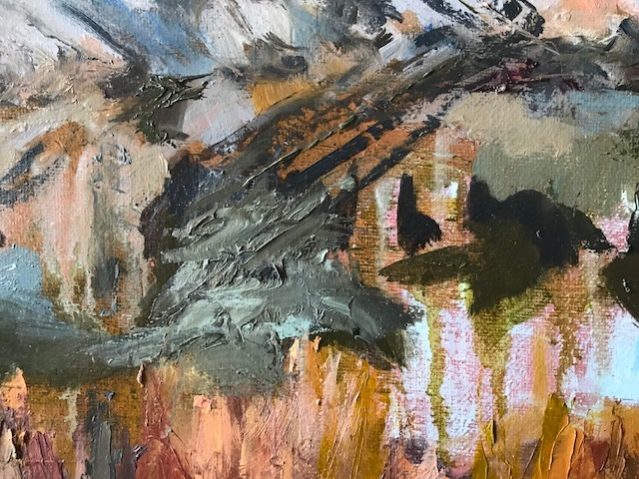
The direction of line work is the skeleton of a piece; it informs. The line work tells something about the aim or the mood of the work. Lately, for me, 1st marks are often diagonals. Now if I make this into a formula, or a pre-planned aspect the work will suffer but there is something really interesting in the tension that diagonals bring. In any work diagonals suggest potential or possible instability. Such marks seem fitting for the time we’re in. I insert here a segment of a recent work called “Boone Lake Down” so you can see one example.

Especially when considering non-objective, non-literal work, the direction of the lines give clues as to the artist’s intention. When literal words can’t express, the lines offer calligraphic hints. Someone named Ali I encountered on Instagram says on his bio clip that “As the world becomes more scary, art becomes more abstract.” Indeed. We reach for the mystical when what is around us cant be named. In fact, the birth of Abstraction in the Western art world came out of the publicly revealed horrors after World War 2. There is a direct tie. We could no longer remain naïve. Pretty pictures were now trite. Os Guinness says in his book Unspeakable, that Auschwitz put an end to enlightenment assumptions that the world on it’s own was becoming something better.

So, given that, how are we to live in any time that we have? How to yet make meaningful work that can still hold hope? How to rest and play with those we love? It is at least by not denying, or skipping past the hard and excruciating things. But, for me hope comes when getting in sync with the rhythms heard still in our darkness. If cicadas can sing in the dark, we should be listening to what it is they are responding to, for “night unto night reveals knowledge”.