In Philadelphia’s Museum of Art there hangs one of my favorites. Henry Osawa Tanner painted this image of the surprising encounter Mary had with the angel Gabriel. This visitor to her chamber, rendered as ineffable light, is speaking. He is announcing the Messiah’s entrance into matter. Of all the attempts to visualize this wonder, this to me is the best. Mary looks as she certainly was: frightened, young, simple and Semitic. She was no blond Italian (in Renaissance finery) blandly receiving such news. Such news. People still think it impossible. Tanner did not.
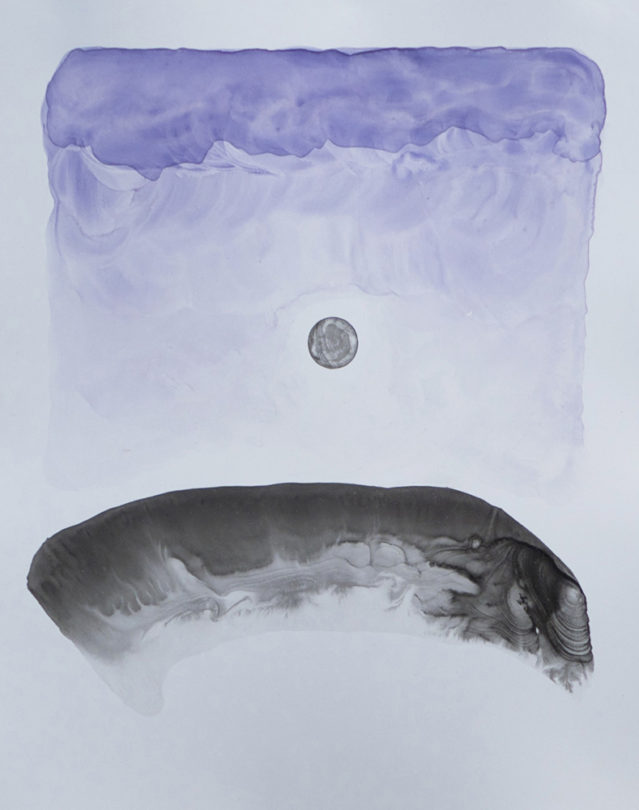
My Incarnation is the third in a present series (shown until September ’14 at the Reece Museum, ETSU). My rendering is meant to look as moonlight over part of the circumference. The hues are not dramatic, and not surreal. Light is reflecting quietly over matter, like a very purposed hovering over chaos.
But look more closely. A detail of the moon face shows the entrance of life in seed form. Soon a crowd of angels would break their silence when this baby would arrive full term. But even that arrival was surprising, only a few even “got it.” His own Mother, who witnessed it all would treasure up all these things, pondering them in her heart.
It all began here, tangibly speaking that is. In time, in a certain fragile space, the One who “is before all things, and in whom all things hold together” reduced Himself to the same dust we are made of so that He could justly win for us the only way out of this ground of dust. He came “all in” to both life and death as we experience it. And He purchased the way into the Life our hearts somehow know to yearn for. We are more than dust, because He became dust for us.
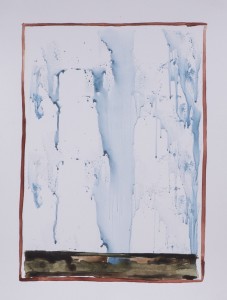 The first image, that of evil, called Abaddon, is dominant and encroaching, seemingly boundless and fearful. The second image is much quieter, gentle but life-giving, boundaried but free. It penetrates the ground rather than taking it over. And it is rimmed by this mysteriously fragile red enclosure. When I made this second image it was after studying some illuminated manuscripts from a book a friend had given me. The first image, as I wrote earlier, took over when I made it, surprised me, troubled me. But it seemed necessary to consider. This second image was planned more carefully, but its making also involved some serendipity. I used a brayer to lay down the veils of blue watercolor, loving the delicate surprise in the markings that resulted, and that were still “in character” with the quiet beauty of good.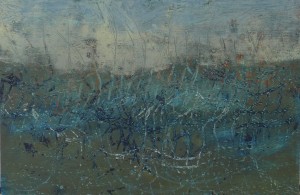
 This is not empty wishing; it is solid unseen trust.