
It’s a subtle thing, and lately I’ve been pondering my reasons for resisting as I’ve been examining some motivations. There are days when working or when in difficult relationships where I can feel this drag right under my skin. What is that? Time to take a careful look under my hood. And then time to study the manual. I take some care here, for resistance improperly applied can disassemble; it can destroy gradually like rust. Or, it can save lives like the firm pressing on the brake pedal when required. My difficulty (and yours) this side of Eden is discerning when resistance is good (which leads to Good) and when it is bad, leading to worse. Religions set up codes, or rulebooks to follow so one can “stay on the straight and narrow”. But creative life is much more complex than that. And in fact, in my own life there are times when “no, I wont go there” was very good, and other times when “I must face this head on”. Read Solomon on this, his words are in the middle of the Creator’s manual.
Recently I listened to a podcast by a Harvard trained Psychiatrist who now coaches artists. She does an effective job exposing the false ideas that hinder us such as “I cant” “I shouldn’t” “It’s all good” I’m all bad” (there are thousands more and we all have pet ones to which we we resort). Here’s an example “this hurts, it can’t be good for me” and I noticed I was fighting on the inside something I have no control over. Mine was not an active rebellion, but more a passive sulky resistance. Once I saw the potential in the manual for exactly this difficulty turning into something valuable I had very good reason to stop resisting and cooperate.
In my art practice, there’s often a negative resister: “I don’t have what it takes” but when I activate what I do have, little steps taken against my pet resistance can reveal something new.
Complex situations aren’t only black and white. And I’m a free agent who has the opportunity to negotiate through them: to select and to take into action. Time is one of the things I have, and materials, and a drive on the inside that I believe my Creator placed there. I’ll resist wasting these things.
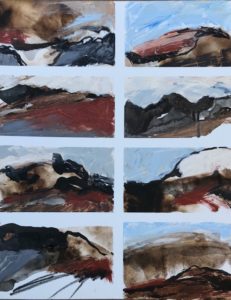
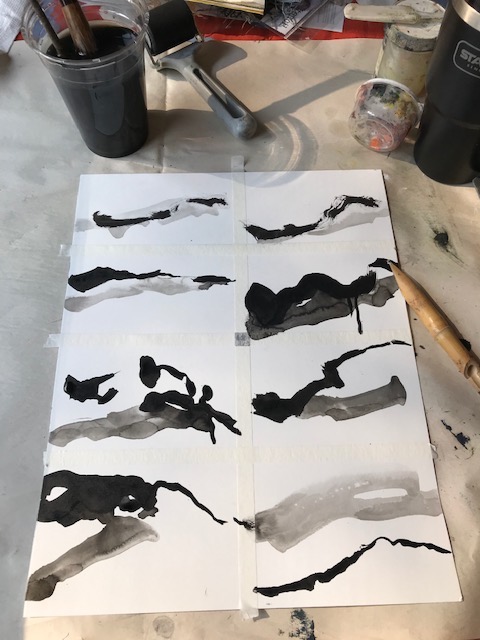
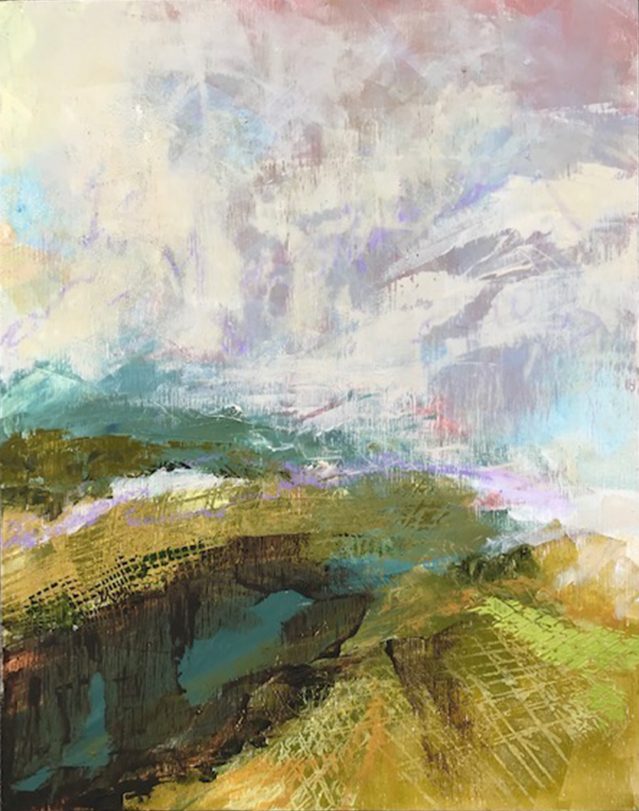
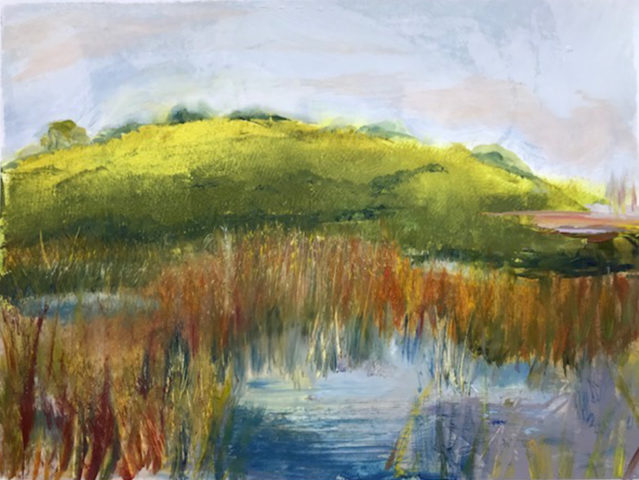
Here you can see some studio exercises this week as I was thinking on all this. I started with ink. And then overlaid with oils in some more subtle values. Each one of these small maquettes could be translated to more formal work. As I still have time, I will.
“Time is what defines our lives” says Paco Seirulo, Leo Messi’s coach, on how the champion soccer player employs his brain and his legs during split second decisions.


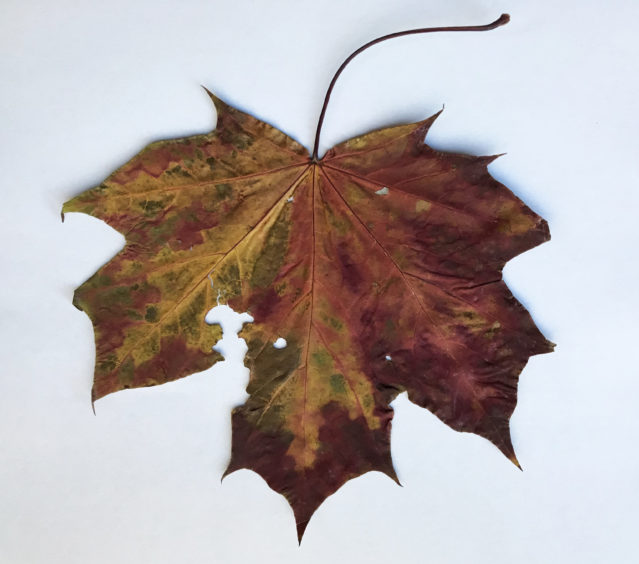
 Last night, near the point of retiring for the day, I opened a small poetry book, a gift given to me in Canada. Therein I found an added bit of beauty between the leaves. Pressed in the pages of this lovely booklet was a singular remnant from a maple. I had almost squished this leaf with my shoe on a walk in Vancouver. My eyes must have stopped me then, but I forgot that I had this incredible thing. The re-discovery near a month later was more delight than I even remembered in the initial find.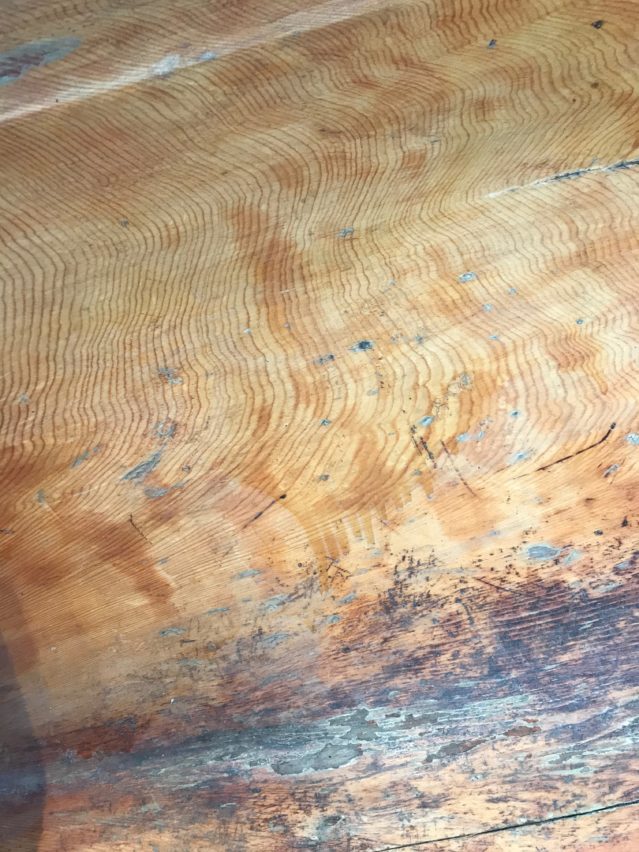
 The floor of a red cedar canoe, in the Museum of Anthropology at the University of British Columbia quietly testifies to its own story. Once standing tall and alone in a rain forested wood fringing the Pacific, it was scope-ed out then heavily laid down. Done. Cut off from its nourishment; it was then gouged, steamed and stretched by the hands of others. Soon it was deemed seaworthy, buoyant and bearing. It was now a thing, not a living thing. This lovely tree was un-noticed until it was found useful for the ends of others. It is said that the first nation Indians were careful with trees, making only single slits in bark to preserve a tree’s life.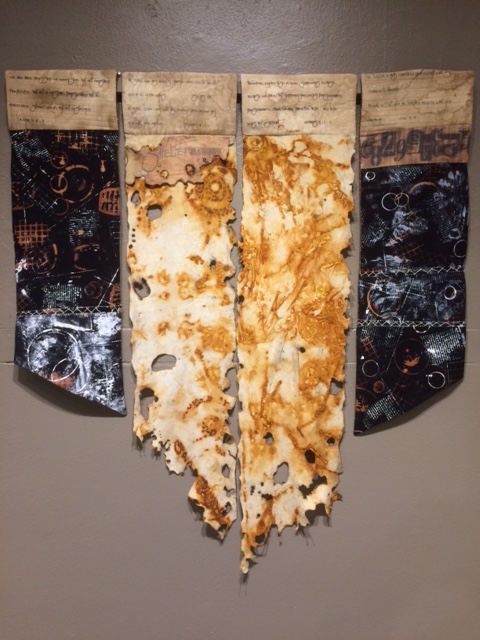
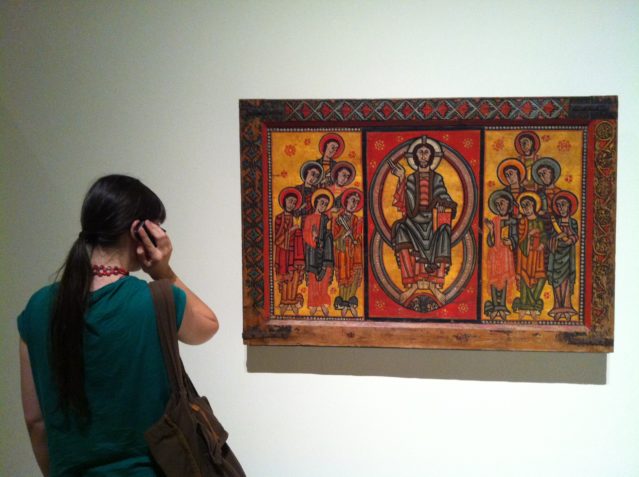
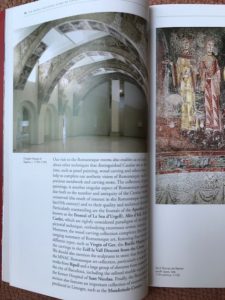 Barcelona’s National Museum of Catalonia has a collection of Romanesque murals that is unmatched by any museum in the world! Room after room gives one almost a time-machine opportunity to enter spaces that were situated in humble towns in the Pyrenees Mountains of Eastern Spain. These murals and sculptural pieces were then carefully removed to be preserved in the museum (imagine the public and private involvement to carry that feat out). Arranged in chronological (therefore stylistic) order, the spaces reveal the emerging imagery from small churches of the medieval period (11th-13thcenturies). What’s available then is a visualization of homegrown private conviction which was developed then displayed for public engagement. What was once internal became publically shared and what was then public becomes privately better understood. And this then down thru centuries for others to consider. Past into present. Imagine that ripple effect.
 Here is a wooden altar panel I especially loved for its graphic punch, simplicity, and pattern. It’s a typical example of Byzantine flatness. Yet the abstraction of forms were rendered with human differentiation and quirkiness. The viewer of the time would have been able to relate. And the viewer now is carried into another world’s way of seeing, even if just catching a glimpse. What was private conviction of the artist became embedded in his public context, what simmered inwardly became visible for others to be able to look and see.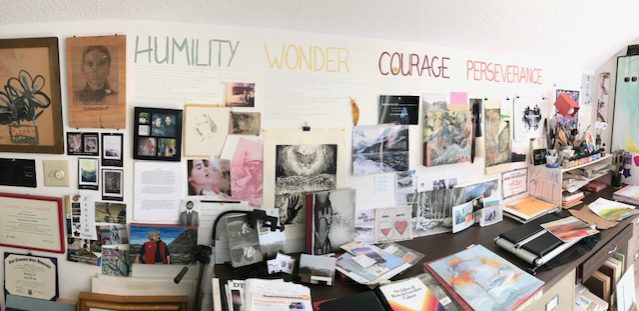
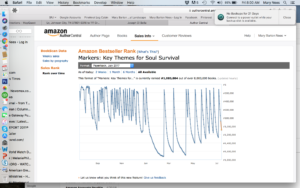 Today is the 1st year anniversary of my
 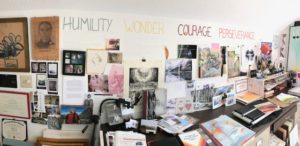 It is an earnest and deep-seated Wonder before the biggest matters that keeps me working. It is needed Humility that keeps me fit. And beyond my own natural chutzpa there is a Courage I count on and ask for from the Spirit who made the world, who made me. Perseverance is the last bit I have to own, and own again. (These 4 aspects–I gleaned out of the Creation account in Genesis–are a sort of working prescription; that’s why they are written big, with growing notes on my studio wall).